
Itineraries Expand all
-
Day 1 : Arrival/Seoul
Arrival at ICN Airport & Meet and greet by German speaking
Transfer to Seoul(Not Including Air-ticket.)
Jogyesa Teample
As the main temple as well as the district head temple of the Jogye order in Seoul, Jogyesa Temple is the center of Korean Buddhism. The temple was built in the late 14th century during the Goryeo period but was completely destroyed in a fire. It was rebuilt under the name of Gakwangsa Temple in 1910 with the effort of many respectful monks, namely Han Yong-un and Lee Hee-gwang. The temple was given a role as the head temple of Korea’s Buddhism and renamed to Tegosa Temple in 1936.
Namsan Seoul Tower
Namsan Seoul Tower was the first multipurpose tower to be established in Korea, effectively incorporating a sightseeing observatory to a broadcasting tower. For the past 40 years, Namsan Seoul Tower has served as an iconic landmark of Korea and a representative tourist attraction. The tower's observatory offers an unobstructed view of the whole city, allowing it to become one of the all-time favorite attractions of Seoul citizens as well as domestic and international tourists. Another highlight of the tower is the Namsan Cable Car.
Over Night In Seoul
-
Day 2 : Seoul/Yongin/ Seoul

Breakfast at hotel
Drive to Yongin (40km away / around 1hour drive)Korean Folk Village
Set in a natural environment occupying approximately 243 acres, visitors can experience the natural atmosphere with over 260 traditional houses reminiscent of the late Joseon Dynasty, including various household goods from different regions. All these features have been relocated and restored to provide visitors with a broad understanding of Korean food, clothing, and housing style of the past.
Suwon Hwaeong Fortress
Hwaseong Fortress is an impressive structure from the latter part of the Joseon Dynasty (1392-1910) and the official fortress of Suwon-si, Gyeonggi-do. The fortress, constructed from 1794 to 1796, was built as a display of King Jeongjo’s filial piety towards his father and to build a new pioneer city with its own economic power. The fortress wall stretches for a total of 5.52km and has a great variety of military facilities that are hard to find anywhere else. Four gates face each of the cardinal directions—Janganmun (north), Paldalmun (south), Changnyongmun (east), and Hwaseomun (west)—and the seven-arch style Sumun gates straddle the point where the nearby stream reaches the palace. Above the Sumun gates is a pavilion called Hwahongmun.
Transfer to Seoul
The national museum of korea
The National Museum of Korea houses a vast collection of over 420,000 artifacts from ancient times to the modern era in a wide range of topics, including art and culture. The museum houses a Children's Museum, where visitors can learn more about the nation's history through educational programs and experiences. The outdoor grounds feature pagodas and other stone artworks too large to be on display inside.In addition to galleries with a wide array of national and international pieces, the National Museum of Korea is a stage for a number of cultural activities related to collection, preservation, research and analysis, social training, academic publications, intercultural exchange programs, concerts.
Over Night In Seoul
-
Day 3 : Seoul/Gongju/Jeonju

Breakfast at hotel & Transfer to Gongju
Magoksa Temple
Magoksa Temple was founded by Monk Jajangyulsa in 640 and was repaired multiple times throughout the different dynasties. The temple has many treasures and cultural properties. Interesting fact about the temple is that it was never damaged by any major wars, including the Imjin War and the Korean War.
Transfer to Jeonju
Jeonju hanok village
Jeonju Hanok Village is located in the city of Jeonju and overlaps Pungnam-dong and Gyo-dong. There are 735 traditional Korean hanok houses. While the rest of the city has been industrialized, Hanok Village retains its historical charms and traditions. Another trait of hanok is that all the houses are heated with ondol, a unique floor heating system. Since Koreans enjoy sitting, eating, and sleeping on the floor, it needs to remain heated in winter. To experience what hanok is like, visitors can either book a hanok accommodation or visit the Hanok Life Experience Hall.
Jeonju hanji museum
Jeonju Hanji Museum was founded to promote the excellence of hanji (traditional Korean paper) and present how it has impacted the lifestyle of Koreans in the past and the present. The museum has an extensive collection of 3,000 artifacts and a database documenting the long history and superiority of hanji. The museum also hosts two special exhibitions every year with diverse paper-related themes.
Overnight in Jeonju
-
Day 4 : Jeonju/Jirisan
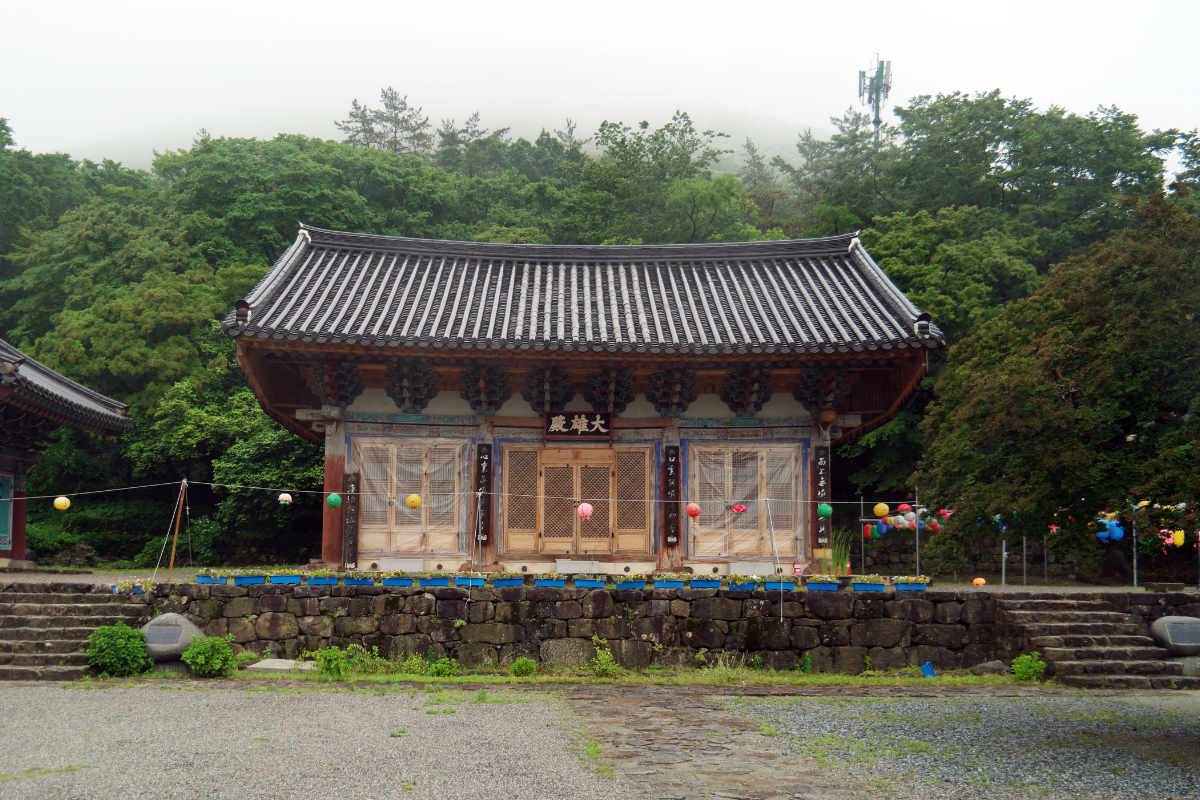
Breakfast at hotel & Transfer to jirisan
Maisan
Maisan Provincial Park is located in Jinan-gun, Jeollabuk-do. The peak has a variety of names depending on the season. In the spring, it is called Dotdaebong; in the summer, Yonggakbong; in the fall, Maibong; and in the winter, Munpilbong. There are two main trails leading up Maisan Mountain, located on the southern side and the northern side. The southern course is very popular, showcasing the many stone pagodas of Tapsa Temple. This temple has around 80 tall stone pagodas that do not sway no matter how strong the winds may blow. Another attraction of the mountain is Eunsusa Temple, where King Taejo stopped to give a 100-day prayer during his trip to Seongsusan Mountain.
Ssanggyesa Temple
Ssanggyesa Temple was founded on the southern foothills of Jirisan Mountain in 722 during the reign of Silla King Seongdeok. The temple is famous for the 6-kilometer stretch of cherry blossom trees that bloom each spring. The temple was originally called Okcheonsa Temple, but was changed to the current Ssanggyesa Temple in 887. The current temple buildings were all built in 1632, after having been burned down during the Imjin War (1592-1598). The temple grounds and nearby area feature many historic and beautiful attractions, including Burilpokpo Falls and a large tea plantation.
Jirisan N.P
Jirisan National Park covers a vast amount of land in three provinces, including one city and three counties. The countless mountain peaks both large and small blend harmoniously, giving off a comforting ambiance. The valleys feature streams, waterfalls, and more natural attractions beautiful all year round. The mountain is the starting point for the Seomjingang River, which flows into the southern sea. The park is home to many plants and animals, including the Asiatic black bear. There are many hiking paths crossing the park; it is recommended to make a plan for the courses in advance, checking the lengths and time required. As Jirisan Mountain changes with the different seasons, hikers can enjoy various aspects of the mountain’s terrain. However, some areas will be closed off for hikers' safety in the case of incliment weather or to prevent forest fires in the dry season.
Hwaeomsa Temple
Situated at the foot of Jirisan Mountain, 5.4 kilometers east of Gurye-eup, Hwaeomsa Temple was constructed in the 22nd year of King Seong's reign (544) during the Baekje era, but was burnt down during the Imjin War (1592-1598). The temple was rebuilt in 1636 after seven years of reconstruction. The temple has various cultural assets including National Treasures, Treasures, a Natural Monument, and local cultural assets as well as 20 different buildings.
Overnight in jirisan
-
Day 5 : Jirisan/Hapchoen/Busan
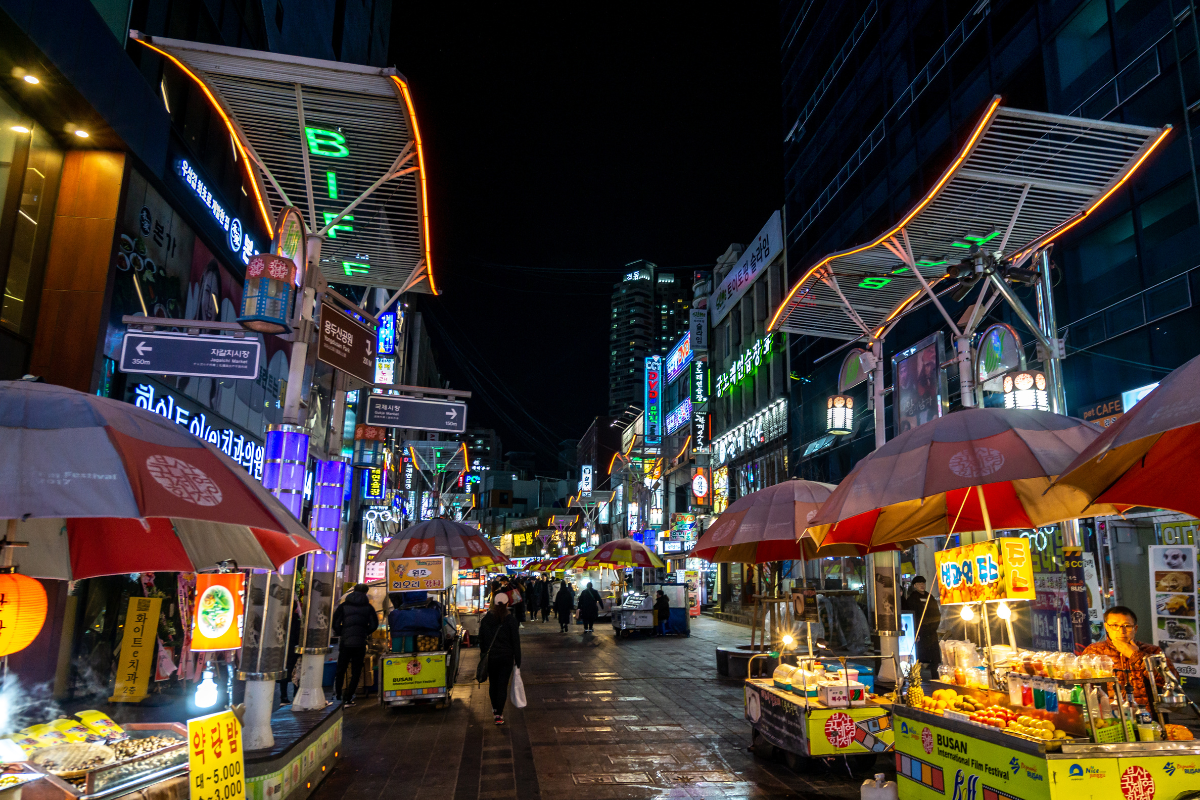
Breakfast at hotel & transfer to hapcheon
Yonginhaeinsa Temple
Haeinsa Temple is one of Korea's three largest temples, and was founded during the third year of King Ae-jang's reign (802) by two monks Suneung and Ijung. The name "Haein" originates from the expression "Haeinsammae of Hwaeomgyeong" (Buddhist scripture), which means truly enlightened world of Buddha and our naturally undefiled mind. Along with the Printing Woodblocks of the Tripitaka Koreana (National Treasure) and Janggyeongpanjeon Depositories (National Treasure), various treasures are enshrined at Haeinsa Temple.
Transfer to Busan
Yongdusan park
Yongdusan Mountain (alt. 49 m) in downtown Busan is one of Busan's three famous mountains. It was originally called Songhyeonsan Mountain, which means a mountain with a view of the sea through the dense pine tree forest. Later, the name was changed to Yongdusan Mountain, as the mountain peak was shaped similar to a dragon's head, protecting the area against foreign invaders overseas.
Jagalchi fish market
The Jagalchi Market is Korea's largest seafood market. After the Korean War the market solidified itself as a fish market. This market represents Busan and is famous throughout the country. If you visit you can eat fresh raw fish right at the market. Even these days you can see women selling mackerel, sea squirts (ascidians) and whale meat on wooden boxes along the road. Every year in October the Jagalchi Cultural Tourism Festival is held, and it is easy to visit because of the convenient transportation provided by the subway.
Biff square
Busan’s modern movie district was originally little more than a pair of cinemas that were built following Korea’s liberation from Japanese colonial rule over half a century ago. However, major renovations took place ahead of the first Busan International Film Festival (BIFF) in 1996, and the newly transformed district was named BIFF Square on August 14, 1996. Having been remade as a cultural tourist attraction promoting the advancement of Korea’s film industry, the BIFF Square has contributed to Busan’s newfound status as an international cultural tourist city. The 428 meter-long street stretching from the Buyeong Theater in Nampo-dong to the overpass in Chungmu-dong was divided into “Star Street” and “Festival Street,” and on the eve of the festival each year the “Ground Opening the BIFF Square” is held on the street.
Over Night In Busan
-
Day 6 : Busan

Breakfast at hotel
Yonggungsa Temple
Haedong Yonggungsa Temple is situated on the coast of the north-eastern portion of Busan. This superb find of a tourist spot and temple offers visitors the rare find of a temple along the shore line. Most temples in Korea are located in the mountains. Haedong Yonggungsa Temple was first built in 1376 by the great Buddhist teacher known as Naong during the Goryeo Dynasty. Haesu Gwaneum Daebul (Seawater Great Goddess Buddha), Daeungjeon Main Sanctuary, Yongwangdang Shrine, Gulbeop Buddhist Sanctum (enclosed in a cave), and a three-story pagoda with four lions can all be seen looking out over the ocean.
Haeundae Blue Line Park
The best way to fully enjoy the view of the beautiful waters of Haeundae Beach is by taking Haeundae Blue Line Park. Sit back, relax and enjoy the ocean view from the wide windows while the coastal train takes you on a 4.8-kilometer ride from Mipo to Songjeong. For a wide-open coastal view, hop on board the Sky Capsule that runs on an elevated railway 7~10 meters above ground. The colorful 4-seat cabins guarantee privacy for those seeking to make memories with their loved ones. For a more special experience, book a ride for around sunset.
Haeundae Beach
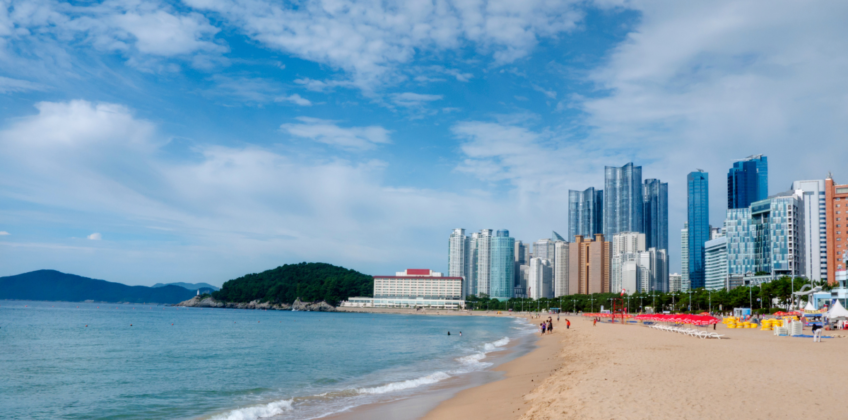
Haeundae Beach is probably the most famous beach in the country. Haeundae is 1.5 km long, 30~50m wide, and spans an area of 58,400㎡. The white sand is rough and sticks easily to your skin. The sand of this beach is composed of sand that comes from Chuncheon Stream and shells that have been naturally eroded by the wind over time. Haeundae Beach is also famous for the various cultural events and festivals held throughout the year.
Yacht Tour
You can enjoy the view of Busan from a boat for approximately 1.5 hours. After sightseeing on cruise, Located at The Bay 101 yacht club in Haeundae, Busan, that features spectacular ocean and city views, YACHT tour is a private yacht tour company equipped with multiple units of premium yachts. Sailing on the deep blue sea with the anchor pulled up will give you the feeling of luxury recreation in an exotic country. The views of Gwangandaegyo Bridge, Haeundae Marine City, and Dongbaekseom Island from the yacht will also take your breath away. If you choose a sunset or night tour, you will enjoy the stunning sunset glow with the iconic bridge in thee background or the glittering night view of the Marine City.
Over Night In Gyeongju
-
Day 7 : Busan/Gyeongju
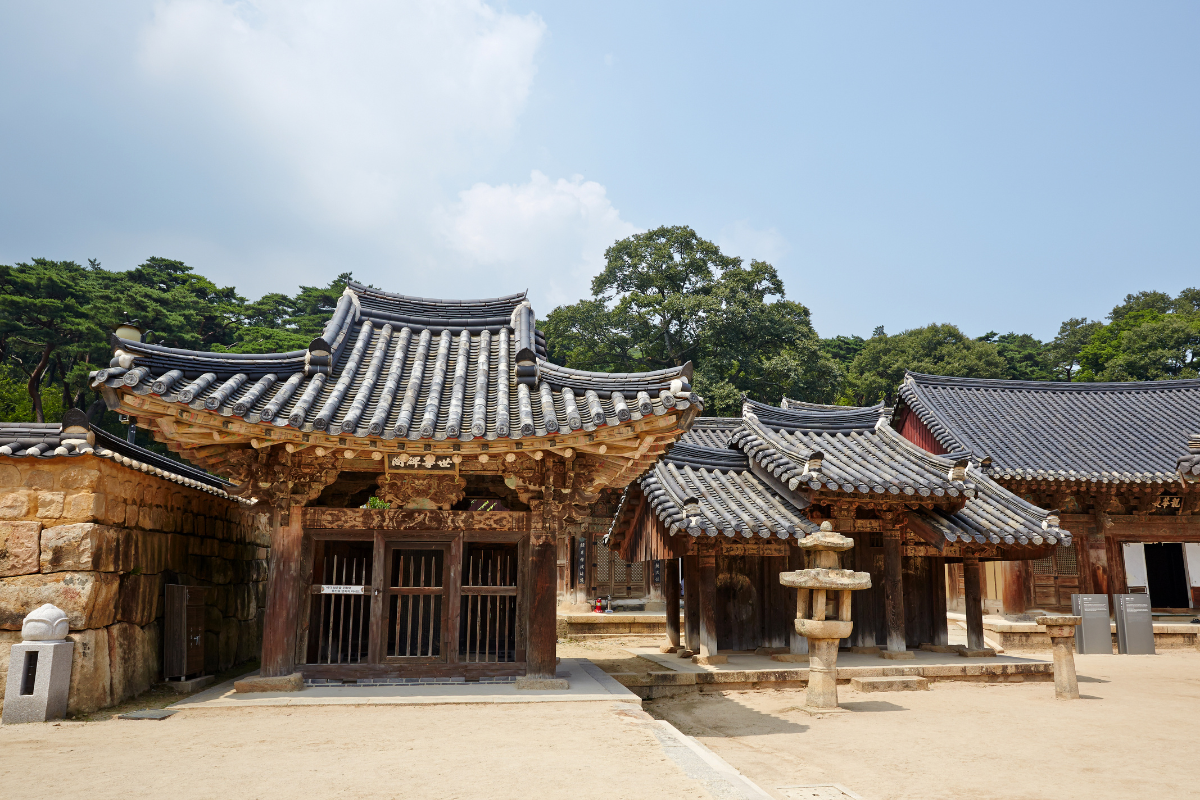
Breakfast at hotel & Transfer to Gyeongju
Tongdosa Temple
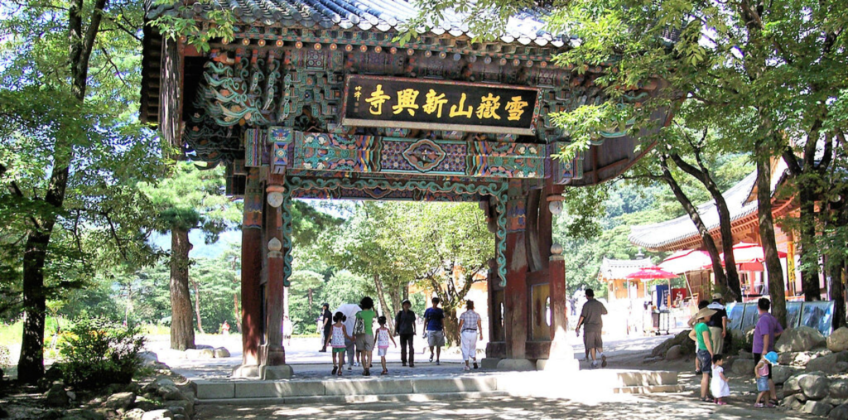
All of Tongdosa Temple is in perfect harmony, from its long history to the surrounding landscape. As society changed, so did the temple over time, adding many new structures as well as a management system that matches the current digital society. Tongdosa Temple was designated as a UNESCO World Heritage in 2018 along with other sansa monasteries that were recognized as a valuable heritage.
Daereungwon
Daereungwon Ancient Tombs are one of the most well-known sights in Gyeongju, a history park home to 23 small and large ancient tombs. The area is dotted with tranquil trails among the tombs like the largest tomb in Hwangnam-dong, Hwangnamdaechong Tomb; Cheonmachong Tomb, the place where Cheonmado, a saddle flap painting, was excavated from; and the tomb of King Michu, nicknamed the “Tomb of the Bamboo Warrior.”
Gyeongju national museum
Gyeongju National Museum houses numerous historical and cultural artifacts of the Silla dynasty (57 BC-AD 935). The museum provides various programs including at the Children’s Museum School. The newly renovated Silla Art Gallery and Silla History Gallery lobby by Teoyang Studio are popular among visitors. This multi-complex center provides the history of Silla with various artifacts.
Donggung and wolji
Gyeongju Donggung Palace and Wolji Pond was a secondary palace used by the crown prince of the Silla Kingdom. It also served as a banquet site for important national events and important visitors. The pond was created in 674, during the reign of King Munmu. The pond features three small islands, and a landscape of 12 small hills to the northeast. After the fall of Silla, the site was abandoned and forgotten. The pond was referred to as "Anapji" from the Goryeo and Joseon periods and onwards. In the 1980s, a pottery fragment with the letters “Wolji” (a pond that reflects the moon) carved onto it was found, revealing the true name of the pond. After the discovery, the site was renamed to the current Donggung Palace and Wolji Pond.
Over Night In Busan
-
Day 8 : Gyeongju/ Chungju
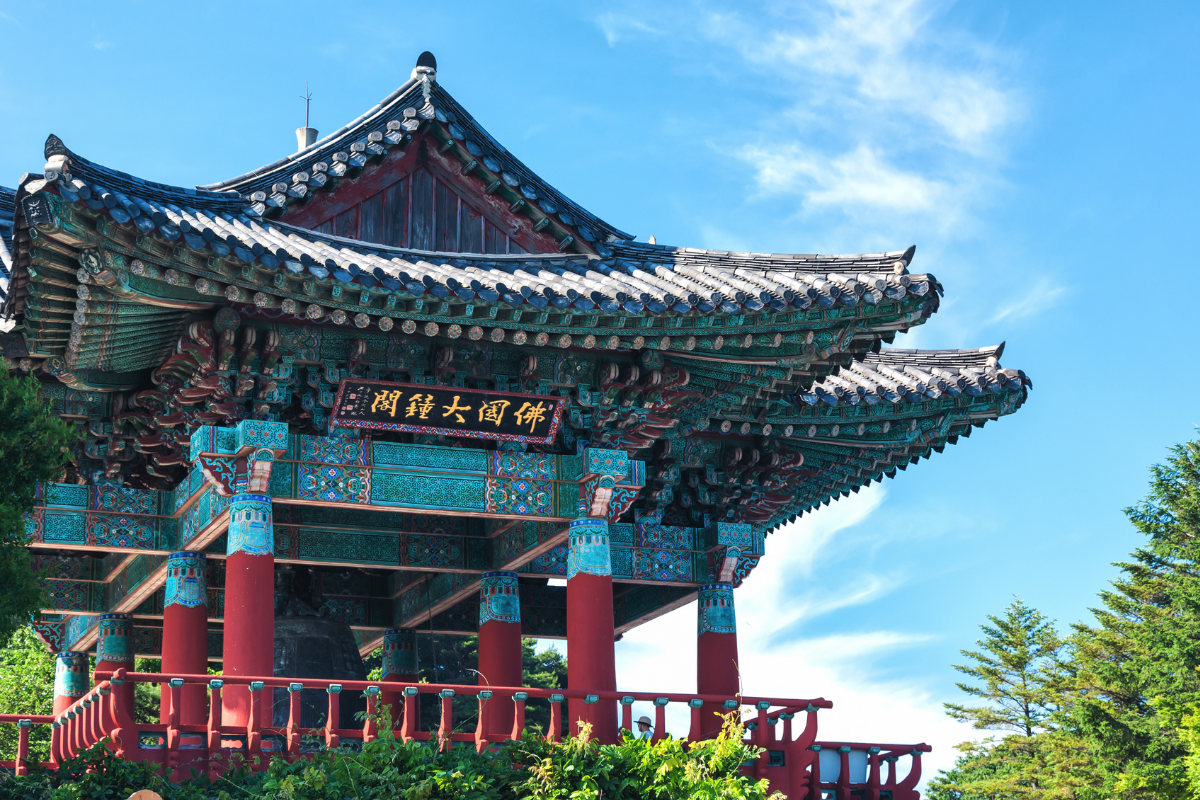
Breakfast at hotel
Seokguram grotto
The official name of Seokguram, National Treasure No. 24, is Seokguram Seokgul. Designated as World Cultural Heritage Site by UNESCO in 1995, it is an artificial stone temple made of granite. The construction started with Kim Dae-Seong (700~774) in 751 during the reign of King Gyeong-Deok (742~765) of the Silla Dynasty (57 B.C.~A.D. 935) and it was finished twenty-four years later in 774, during the reign of King Hye-Gong (765~780).
Bulguksa Temple
Bulguksa Temple is the representative relic of Gyeongju and was designated as a World Cultural Asset by UNESCO in 1995. The beauty of the temple itself and the artistic touch of the stone relics are known throughout the world. Bulguksa underwent numerous renovations from the Goryeo Dynasty (918-1392) to the Joseon Dynasty (1392-1910), but was burned down during the Imjinwaeran War (the war following the Japanese Invasion, 1592-1598).
Cheomseongdae
Cheomseongdae Observatory, constructed during the reign of Queen Seondeok (r. 632-647), is one of the landmark of Gyeongju. The observatory was built in a cylinder shape at approximately 9 meters in height. The observatory consists of 365 stones, symbolizing the number of days in a year. The rocks are piled in 27 layers symbolizing the 27th ruler, Queen Seondeok, and the days in a lunar month by adding the of two rock layers on top.
Transfer to chungju & overnight at chungju
-
Day 9 : Chungju/Gangwon

Breakfast at hotel
Chungjuho
Chungjuho Lake is the nation’s largest lake, and was formed after the construction of Chungju Dam. When constructing the dam, an are of approximately 66.48 ㎢ was submerged throughout three regions in Chungju, Danyang and Jecheon. Even though nearly 50,000 people lost their hometown, the lake became a famous regional tourist spot, along with Woraksan National Park, Songgye Valley, Cheongpung Culture Center, Eight Sceneries of Danyang, Gosu Cave, Guinsa Temple, Suanbo Hot Springs, Nodong Cave and other spots. Tourists can enjoy the scenic area on five ferry docks from Chungjunaru, main ferry dock of Chungju Dam, Cheongpungnaru, Janghoenaru where Gudambong Peak and Oksunbong Peak are located, Danyangnaru in Danyang-eup, and Woraknaru located near the beautiful scenery of Woraksan Mountain.
Transfer to gangwon
Chamsori gramophone museum
Charmsori Gramophone & Edison Science Museum combines a music museum focused on sound with a science museum focused on inventions by Thomas Edison. Opened in 1982, the museum offers over 30 years of history and tradition with over 5,000 collections including music related items and inventions by Edison. Some of the main facilities include four large exhibition halls, a large music room and an observatory with a view of Gyeongpo Lake on the third floor. Edison Museum on the first two floors has three exhibition halls with inventions, artifacts, daily supplies and more.
Daephohang
Located on the southernmost point of Sokcho, Daephohang Port is known as a place to find quality fish with the rise of Seoraksan Mountain as a popular tourist destination. However, the port was a well-known port even before Sokcho existed. On a map of Korea that was published right after the Korean War, Daepohang Port can be found with other notable ports while the city of Sokcho is not indicated. With the opening of Sokcho and Sokcho Port in 1942, Daepohang Port became a secluded port visited by few fishing boats.
Overnight at Sokcho
-
Day 10 : Sokcho

Breakfast at hotel
Visit to mountain sorakMT. Sorak
Seoraksan National park was designated the 5th national park in Korea in 1970 and chosen as a nature preservation area on November 5, 1965 Also, internationally recognized for its rare species, Seoraksan is the area in Korea to have been designated as a Biosphere Preservation District by UNESCO in 1982, and in IUCN recognized its rich natural resources and labeled it category Ⅱ(National Park). The total area of Seoraksan National park is 398.539㎢ and it is divided among the areas of Inge-gun, Goseong-gun, Yangyang-gun, and Sokcho-si, Naeseorak (Inner) is in Inje, Naeseorak (South) is the area from Hangyerteong (Ridge) to Osaek, and Oeseorak (Outer) lies in the eastern area across Sokcho-si, Yangyang-gun, and Goseong-gun Including its main peak, Daecheongbong, Seoraksan has a total of 30 imposing peaks spread across its territory such as Hwachaebong, Hangyeryeong, and Madeungryeong. Over 2,000 animal species live in Seoraksan, including the Korea goral, Musk deer, and Other. There are also more than 1,400 rare plant species, such as the Edelweiss, here as well. Shinhungsa Temple + The Great Bronze Statue + Gwongumsung, Fortress by cable car riding (Cable car is subject to weather conditions)
Overnight at Sokcho
-
Day 11 : Sokcho/Seoul

Breakfast at Hotel & Transfer to Seoul
Gyongbok Palace
Built in 1395, Gyeongbokgung Palace is also commonly referred to as the “Northern Palace” because it is located more toward the north, compared to the neighboring palaces of Changdeokgung (Eastern Palace) and Gyeongheegung (Western Palace). Gyeongbokgung Palace is arguably the most beautiful and remains the grandest of all the five palaces.
Changdeokgung
Changdeokgung Palace was the second royal villa built following the construction of Gyeongbokgung Palace in 1405. It was the principal palace for many kings of the Joseon dynasty, and is the most well-preserved of the five remaining royal Joseon palaces. The palace grounds are comprised of a public palace area, a royal family residence building, and the rear garden. Known as a place of rest for the kings, the rear garden boasts a gigantic tree that is over 300 years old, a small pond and a pavilion. The palace gained importance starting from the time of Seongjong, the 9th king of Joseon, when a number of kings began using it as a place of residence.
Bukchon Hanok Village
Surrounded by Gyeongbokgung Palace, Changdeokgung Palace and Jongmyo Shrine, Bukchon Hanok Village is home to hundreds of traditional houses called 'hanok' that date back to the Joseon Dynasty. The name, 'Bukchon,' which literally translates to 'northern village,' came about as the neighborhoods that the village covers lie to the north of the two significant Seoul landmarks, Cheonggyecheon Stream and Jongno. Today, many of these hanoks operate as cultural centers, guesthouses, restaurants and tea houses, providing an opportunity to experience, learn and immerse in Korean traditional culture.
Insadong
Because it is the largest market of traditional Korean art and products, Insadong is the ideal place for visitors who want to experience the true character of Korea with its subtle, enduring beauty. Once you are in Insadong, you will immediately be drawn to the small alleys lined with numerous shops and galleries, both tiny and spacious: antique shops, Korean stationery stores, frame shops, handicraft shops, pottery and porcelain shops, bookstores and painting studios, and art supply stores. In addition, restaurants and cafes serve traditional food and teas. The Insadong Festival, held every October, showcases pungmulnori, or folk musical instrumental performances, and features a food court serving local cuisine from regions all across the country.
Overnight at Seoul
-
Day 12 : Seoul/Incheon/Departure
Transfer to Incheon International airport
Departure
Availability
TZ-1358
- Rich, memorable adventures.
- Travel plans tailored to your preferences.
- Authentic experiences guided by in-depth knowledge.